In April 2026, more than 60 participants from across Europe gathered in Kassel for the THREE C Network Conference, bringing together researchers, practitioners, municipalities, businesses and project representatives to explore the future of the Circular Carbon Economy.
For the newly starting C5 project – Carbon Conversion Cycles: From Cultivation to Construction, the conference provided an important opportunity to connect the project’s objectives with a wider European discussion on circular carbon value chains.
The central theme of the conference was “From Waste to Value – A System of Opportunities”. It highlighted a simple but powerful idea: residual biomass, agricultural resources and organic waste streams can become valuable resources — but only if cultivation, processing, application, markets and regional cooperation are developed together.
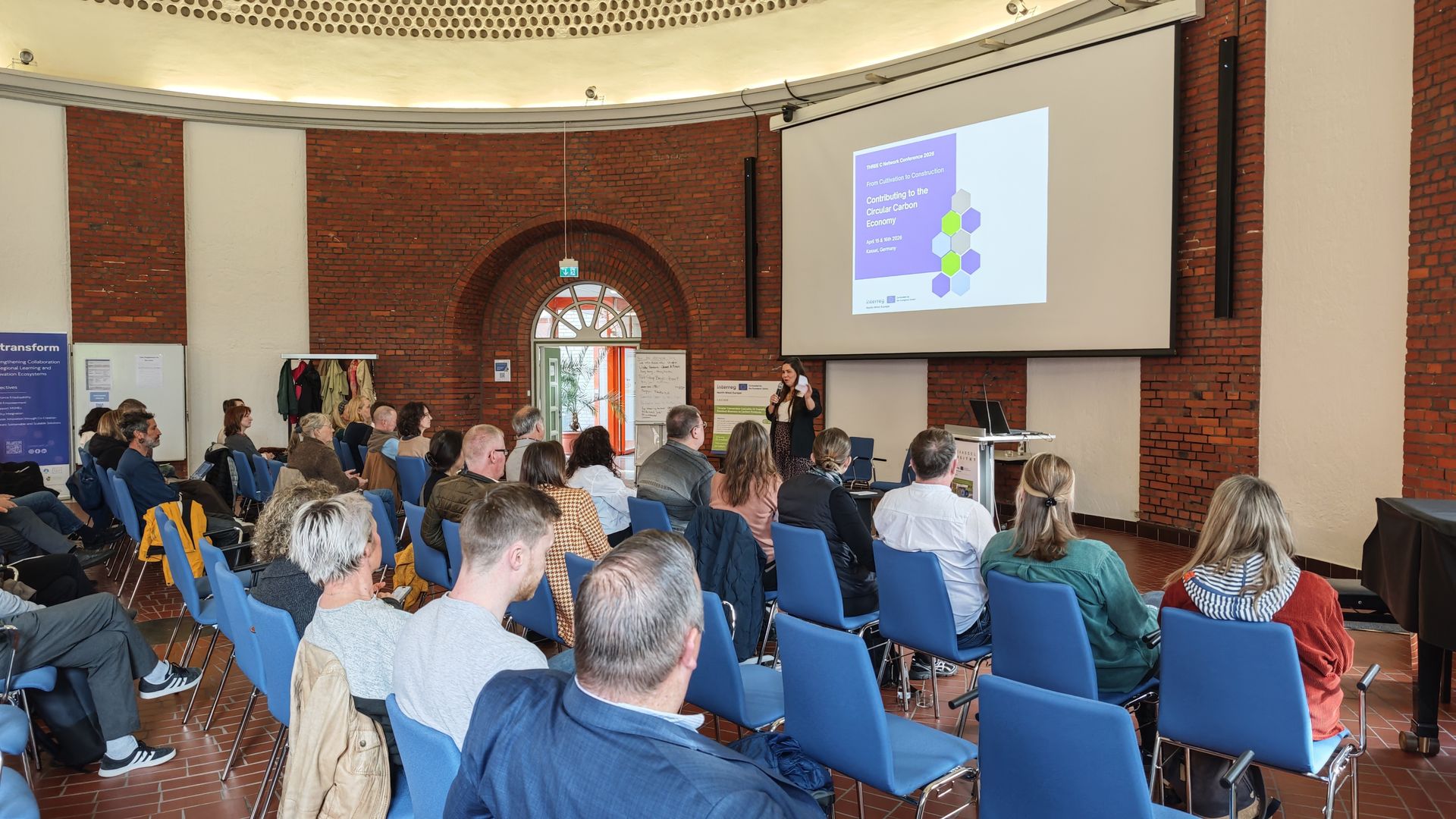
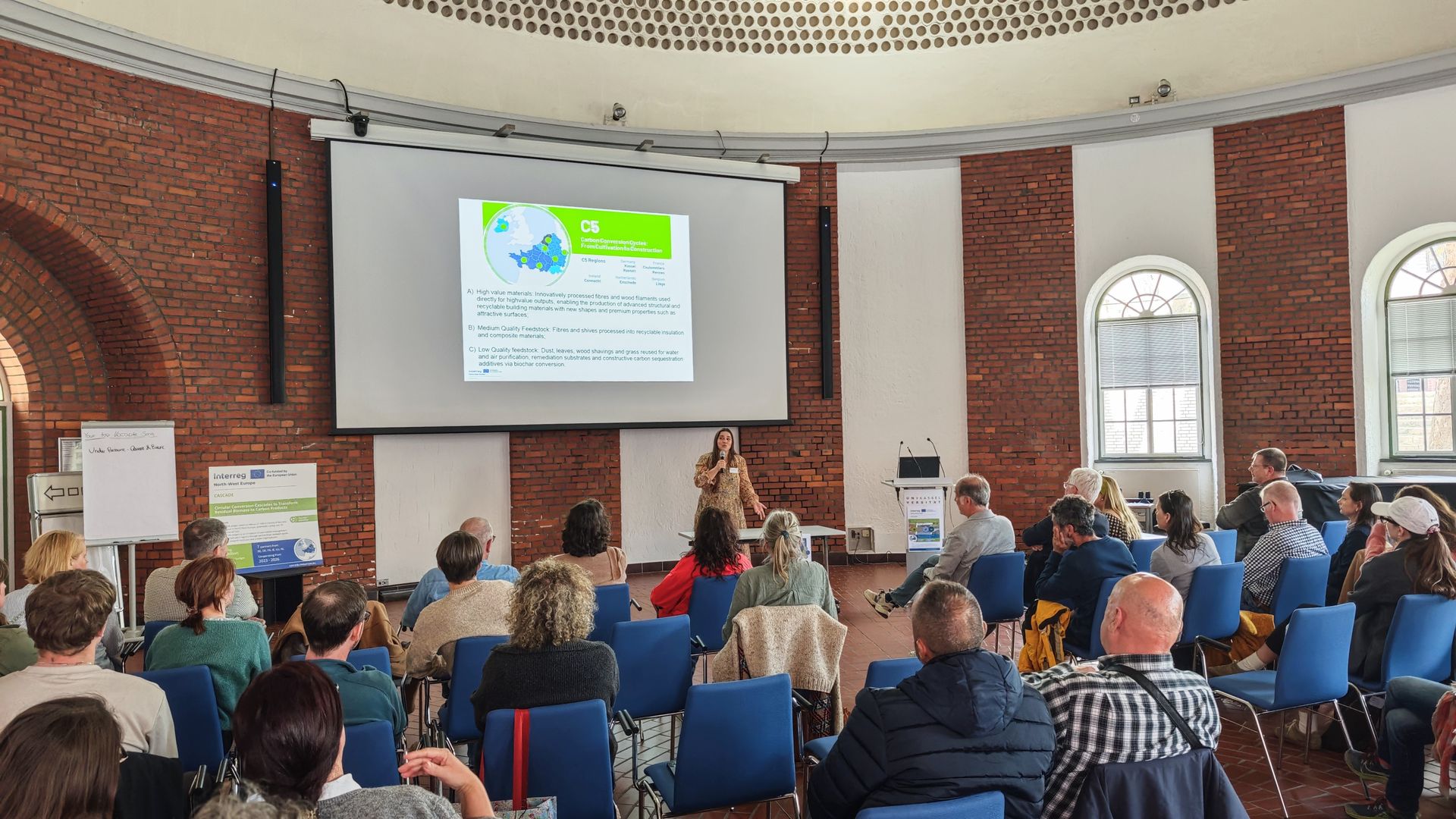
Connecting different perspectives
Across presentations, workshops and discussions, several topics were explored that are directly relevant for C5:
- green waste and agricultural residues as local resources
- hemp as a multifunctional crop with diverse material applications
- woody biomass such as willow for energy, materials and other product pathways
- biochar as a circular carbon product with applications in soil, water, construction and purification
- construction as a sector with strong potential for circular and bio-based alternatives
These perspectives reflect the central idea of C5: circular carbon solutions cannot be developed in isolation. The project connects different biomass sources, cultivation systems, conversion processes and construction-related applications into broader Cultivation-to-Construction value chains.
From innovation to implementation
A key theme throughout the conference was the gap between promising ideas and real-world implementation. Many circular carbon solutions already exist at technical or pilot level, but wider uptake still faces challenges.
These include unclear business cases, complex certification requirements, fragmented value chains, limited awareness among stakeholders and logistical barriers between cultivation, processing and end use.
For C5, these challenges are highly relevant. The project aims not only to test new material and biomass applications, but also to understand what is needed to make circular carbon value chains practical, transferable and economically meaningful.
Why the conference mattered for C5
The THREE C Network Conference showed that the foundations for a Circular Carbon Economy are already visible. Many actors are working on promising solutions — from biochar and biomass conversion to hemp-based materials, willow applications, green waste use and circular construction.
At the same time, the conference made clear that stronger connections are needed between ideas, regions, sectors and markets. This is where C5 can contribute.
By linking rural biomass production with circular applications in the construction sector, C5 aims to support new regional value chains, create added value for rural and peri-urban areas, and contribute to a more resource-efficient economy across North-West Europe.
Events such as the THREE C Network Conference are therefore more than moments of exchange. They help build the networks, trust and shared understanding needed to move circular carbon solutions from individual ideas towards practical implementation.